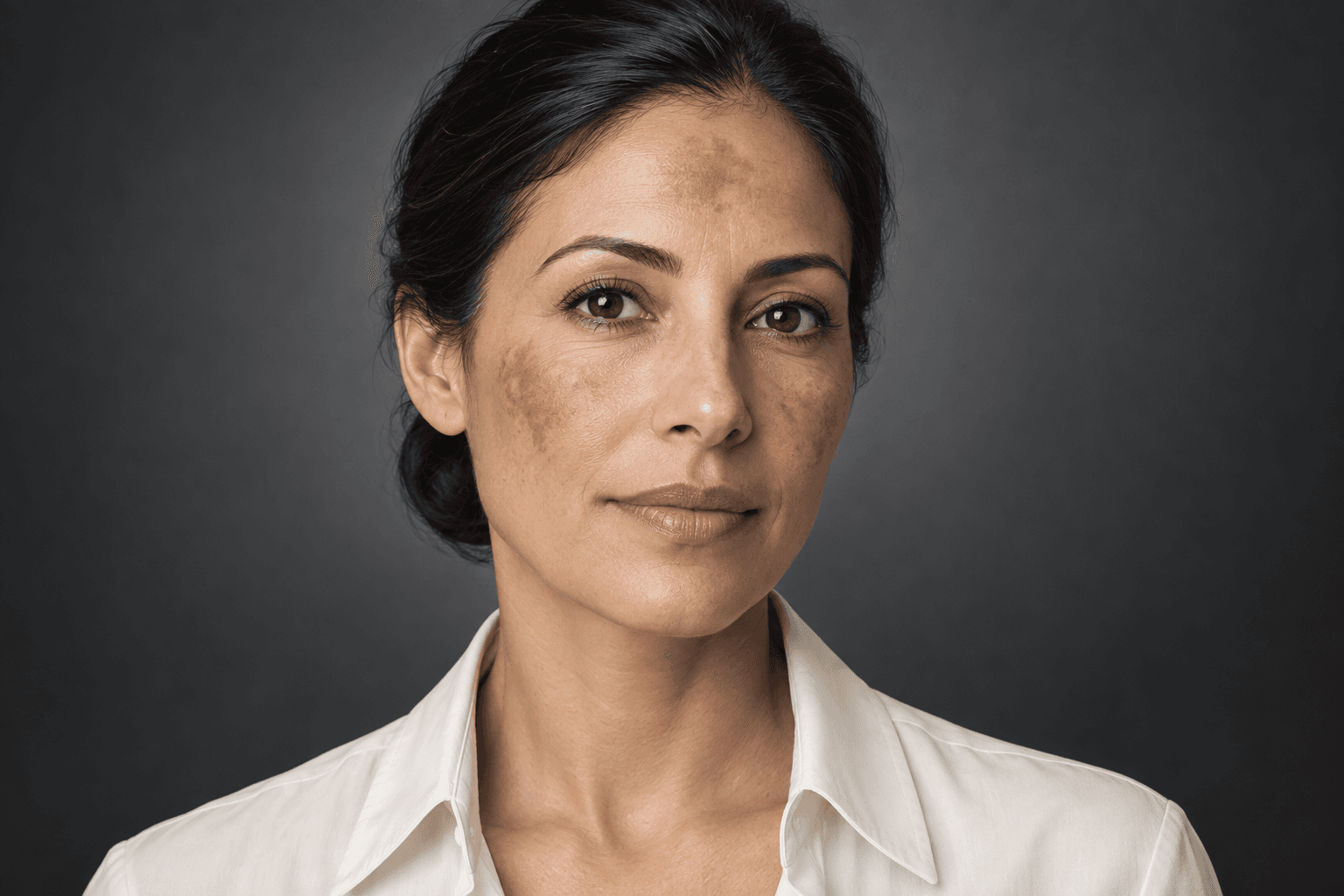
Melasma is a type of hyperpigmentation, not its opposite. Hyperpigmentation is the broader term for increased pigmentation; melasma describes a particular condition within that category. Post-inflammatory hyperpigmentation, often shortened to PIH, is another example. Asking “melasma or hyperpigmentation?” therefore mixes a specific condition with the group it belongs to. DermNet: skin pigmentation.
The useful question is what is causing the darker area. This guide explains the relationship between the terms and the history that can help a clinician distinguish them. It is not a checklist for diagnosing a patch from its color or choosing a procedure from a photograph.
One category, different causes
Think of the relationship this way:
- Hyperpigmentation: the broad category of increased pigmentation.
- Melasma: a named condition with characteristic pigmentation patterns.
- Post-inflammatory hyperpigmentation: pigmentation following inflammation or injury.
- Other causes: these two examples do not cover every cause of darker skin patches.
“Dark spot” is an everyday description, not a complete diagnosis. Skin pigmentation can change for several reasons, and the same broad label does not establish that two people have the same condition. DermNet: skin pigmentation.
Melasma and post-inflammatory marks: a limited comparison
The table compares two forms of hyperpigmentation, rather than treating melasma and hyperpigmentation as mutually exclusive alternatives. These are clues for discussion, not rules that confirm a diagnosis.
| Question | Melasma | Post-inflammatory hyperpigmentation |
|---|---|---|
| What history can matter? | Sunlight and hormonal factors, including pregnancy, can be relevant. | A preceding skin problem or injury, such as acne, dermatitis or a burn, is relevant. |
| Where can it appear? | Common facial areas include the cheeks, forehead and upper lip. | Marks occur where the earlier inflammation or injury affected the skin. |
| What might it look like? | Flat brown or grayish patches. | Marks can vary from light brown to darker colors. |
| What remains uncertain? | A familiar-looking facial pattern does not confirm that a patch is melasma. | A mark after a breakout still needs context; color alone cannot establish its depth or appropriate management. |
Sources: British Association of Dermatologists: melasma and DermNet: post-inflammatory hyperpigmentation.
Why the history matters more than a label
A dark mark left after acne is a different starting point from pigmentation that appeared without an obvious preceding breakout. Irritation from skin-care products, an injury and some medicines can also be relevant. If an underlying condition continues to trigger marks, addressing the pigment alone may leave the cause unaddressed. Do not stop a prescribed medicine because you suspect it is involved; discuss that concern with its prescriber. AAD: dark spots.
For PIH, clinicians consider the history alongside examination of the skin. This helps explain why matching your mark to someone else's online photograph is not enough: the preceding inflammation and the examination add information that the image does not provide. DermNet: post-inflammatory hyperpigmentation.
Will post-inflammatory marks fade?
Once the cause has been identified and addressed, fading can still take time. The AAD gives six to twelve months as a common example for some spots that are only a few shades darker than the surrounding skin; deeper pigmentation can take years. These are general examples, not a deadline or a way to judge pigment depth from a photograph. AAD: dark spots.
If new breakouts or irritation continue, new marks can appear while older ones fade. Ask which problem is still active and how progress will be reviewed. For flat color changes versus a change in skin contour, see acne scar types.
Why one “dark-spot treatment” does not fit every case
A treatment name is not a diagnosis. For melasma, a dermatologist considers factors such as skin tone, how deeply the pigment lies and possible triggers when recommending an approach. The assessment may involve closer examination with specialized lighting or a dermatoscope; additional testing is sometimes needed to exclude another condition. AAD: melasma diagnosis and treatment.
Procedures require a separate risk discussion. Chemical peels and some light or laser approaches can cause unwanted pigment changes, and a procedure can worsen melasma instead of improving it. That is a reason to ask why a particular method is appropriate—not to assume that a stronger treatment is a better one. British Association of Dermatologists: melasma.
For the broader distinction between cosmetic goals and procedure selection, read how facial treatments are selected.
Basic care is different from a treatment plan
Gentle skin care helps avoid adding irritation. Stop using a cosmetic product that burns or stings; that sensation is not evidence that it is fading pigment. AAD: dark spots.
Sun protection for melasma: what to look for
For melasma, the SPF number is only part of the decision. SPF measures protection against sunburn, mainly from UVB; broad-spectrum protection covers UVA and UVB. These UV labels do not establish protection against visible light. FDA: sunscreen labeling.
Visible sunlight can worsen melasma, particularly in darker skin tones. The AAD recommends a tinted sunscreen containing iron oxide, alongside broad-spectrum protection, SPF 30 or higher and water resistance. AAD: melasma self-care.
When choosing one, check three things:
- The UV protection: look for broad-spectrum SPF 30+ rather than relying on the tint alone.
- The pigment ingredients: check for iron oxide. On U.S. sunscreen labels, it appears among the inactive ingredients; other countries may present the ingredient list differently.
- The finish: choose a shade and texture you can apply properly and use consistently. A formula that blends with your skin can make daily use easier. AAD: dark spots.
Makeup, daylight and reapplication
Apply sunscreen before camouflage makeup. Certain iron-oxide foundations have reduced visible-light pigmentation in a controlled study, but that finding does not establish equivalent protection from every foundation or concealer. AAD: melasma treatment, clinical study.
Apply sunscreen to exposed skin before going outdoors. Reapply about every two hours outdoors and after swimming or sweating, following the product directions. A higher SPF does not extend that interval. Use shade and a wide-brimmed hat as well. UVA can pass through window glass, so mention regular time beside a sunny window when discussing your exposure with a clinician. AAD: sunscreen FAQs.
Sun protection supports management; it does not guarantee that melasma will clear or stay away. A trial finding better results with UV-plus-visible-light protection also included a prescribed pigment treatment, so it should not be read as proof that sunscreen alone cures melasma. Randomized melasma trial.
Questions to take to an assessment
Bring a short timeline: when the change began, whether it has spread or changed, and the medicines and skin-care products you use. Note any preceding skin problem, previous procedures and how your skin responded so the discussion starts with your history, not just today's appearance. MedlinePlus: skin color changes.
Rather than arriving with a device already selected, ask:
- What explains this pigmentation, and what remains uncertain?
- What are the reasonable options, including not having a procedure?
- What benefits and risks are realistic for my skin tone?
- What experience do you have with the proposed procedure in people with a similar skin tone?
- What follow-up, recovery time and total cost should I understand before deciding?
Reviewed by our medical team
Dra. Jessica Tapia
Medical Director
Clinical content on this blog is reviewed by the Juvenalia Brío medical team for scientific accuracy and consistency with the care we provide.