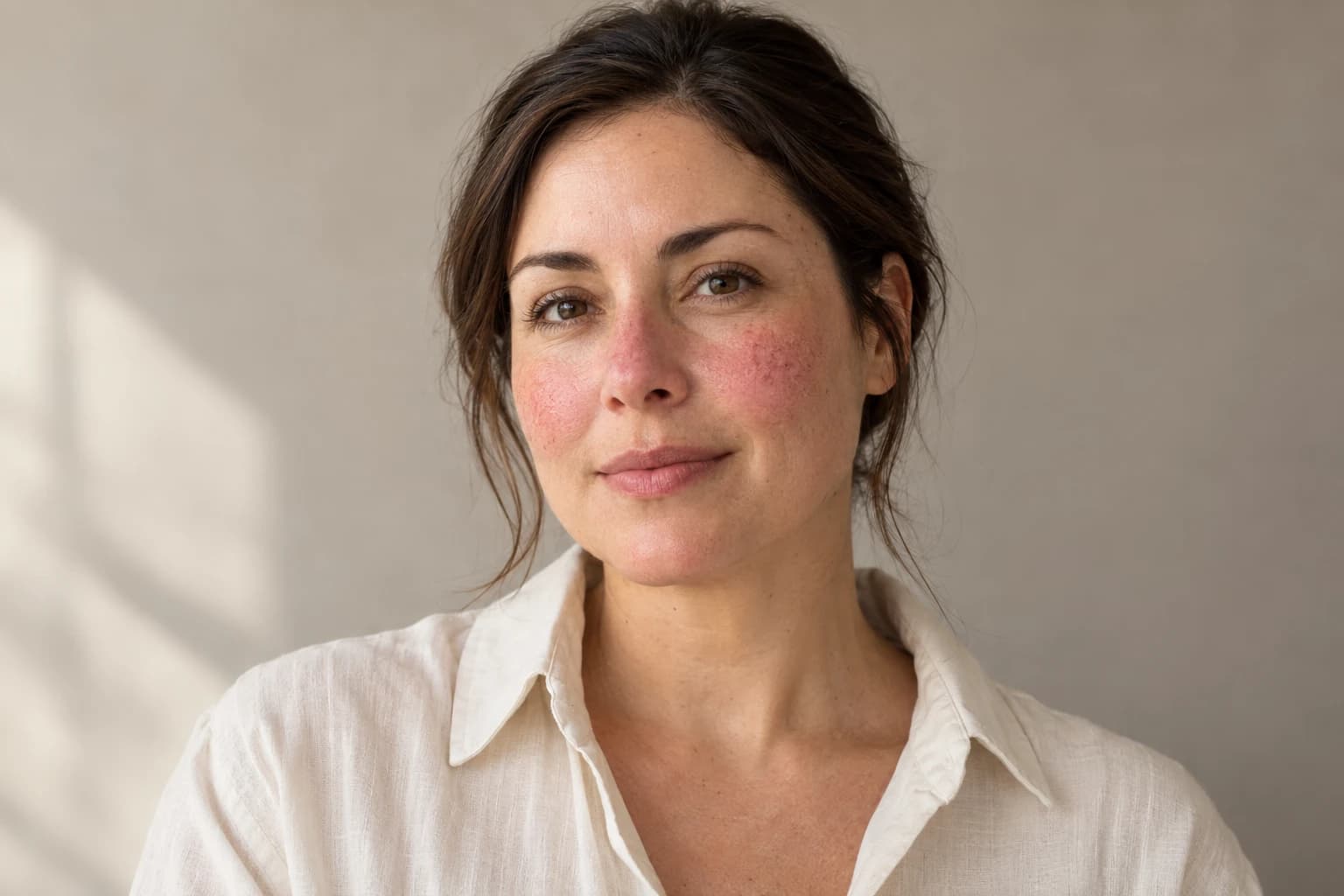
Rosacea: What It Is, Types, Causes and Treatment
Rosacea is one of the most common and, at the same time, most misunderstood chronic inflammatory skin diseases. It primarily affects the center of the face—cheeks, nose, forehead and chin—and manifests with redness that does not disappear, visible blood vessels, outbreaks of papules and, in advanced cases, thickening of the skin. It is estimated that around 5% of the adult population worldwide suffers from it, although many people live with it without diagnosis because they confuse it with sensitive skin or acne.
There is no definitive cure, but rosacea is highly manageable. Understanding what causes it, recognizing your subtype and following a plan that combines medical treatment with appropriate daily care can significantly reduce outbreaks and improve quality of life.
In summary
- Rosacea is a chronic facial inflammatory disease with four recognized subtypes, each with distinct symptoms and therapeutic approach.
- It has no cure, but topical treatments (azelaic acid, ivermectin, metronidazole), oral treatments (doxycycline) and laser/light treatments can effectively control symptoms.
- The most documented triggers include sun exposure, heat, alcohol, spicy foods and emotional stress.
- Skin care is part of treatment: certain ingredients (niacinamide, ceramides, mineral sunscreen) help, while others (alcohol, fragrances, menthol, aggressive retinoids) worsen rosacea.
- It is not caused by lack of hygiene. Current evidence points to a combination of genetic predisposition, immune dysregulation and environmental factors.
What is rosacea?
Rosacea is a chronic inflammatory dermatosis that affects mainly the skin of the center of the face. It is characterized by recurrent episodes of redness (flushing), persistent erythema, telangiectasia (visible blood vessels), papules, pustules and, in advanced phases, phymatous changes such as thickening of nasal skin (rhinophyma).
Recent epidemiological studies estimate a global prevalence close to 5.1%, with variations according to region and phototype. The condition is more frequent in people with light skin phototypes (Fitzpatrick I-III), in those over 30 years old and in women, although men tend to develop more severe forms, particularly rhinophyma. It is important to note that rosacea also appears in dark skin, where it is frequently underdiagnosed because erythema is less visually obvious.
Rosacea follows a pattern of flare-ups and remissions. Many patients experience periods where symptoms are minimal, alternating with episodes of exacerbation provoked by specific triggers. Without treatment, the disease tends to progress gradually.
The 4 subtypes of rosacea
The classic classification recognizes four subtypes of rosacea. A single patient may present characteristics of more than one subtype simultaneously, and the picture may evolve over time.
| Subtype | Clinical name | Main symptoms | Typical severity | Primary therapeutic approach |
|---|---|---|---|---|
| 1 — Erythematotelangiectatic (ETR) | Vascular rosacea | Persistent redness, frequent flushing, visible telangiectasia, burning sensation | Mild to moderate | Sun protection, topical brimonidine, vascular laser (PDL/IPL), barrier-repairing skincare |
| 2 — Papulopustular | Inflammatory rosacea | Papules and pustules on erythematous background, similar to acne but without comedones | Moderate | Topicals (azelaic acid, ivermectin, metronidazole), oral doxycycline in moderate-severe cases |
| 3 — Phymatous | Rhinophyma and variants | Skin thickening, irregular texture, nasal enlargement (rhinophyma), dilated pores | Severe | Oral isotretinoin, surgical or ablative laser procedures |
| 4 — Ocular | Ocular rosacea | Red, irritated and dry eyes; foreign body sensation; blepharitis; telangiectasia on eyelids | Variable | Eyelid hygiene, artificial tears, oral doxycycline, periocular topical metronidazole |
Subtype 1: Erythematotelangiectatic (ETR)
The most common subtype. Persistent facial redness is its hallmark, accompanied by flushing episodes that can last minutes or hours. Telangiectasia (small visible vessels) usually concentrate on cheeks and nasal wings. Patients frequently report burning, increased sensitivity and dry skin. This subtype has a predominant vascular component: facial blood vessels dilate easily and lose their ability to contract normally.
Subtype 2: Papulopustular
It manifests with red papules and pustules on a background of persistent erythema, a picture that is frequently confused with vulgar acne. The key difference: in papulopustular rosacea there are no comedones (blackheads or whiteheads), and lesions concentrate in the central zone of the face. This subtype responds well to topical anti-inflammatory treatments and, in moderate to severe cases, to oral antibiotics at anti-inflammatory doses.
Subtype 3: Phymatous (rhinophyma)
The least frequent but most visible subtype. Progressive thickening of skin occurs due to hyperplasia of sebaceous glands and connective tissue, affecting most frequently the nose (rhinophyma), although it can also affect chin, forehead, cheeks and ears. It is more common in men. Oral isotretinoin can slow progression in early stages; in advanced cases, procedures such as ablative laser or surgery are required.
Subtype 4: Ocular
Up to 50% of patients with cutaneous rosacea present some degree of ocular involvement. Symptoms include dryness, burning, gritty sensation, conjunctival redness, blepharitis (inflammation of the eyelid margin) and telangiectasia on the eyelids. In severe cases it can compromise the cornea. Ocular rosacea requires ophthalmological evaluation and frequently combined treatment with eyelid hygiene, artificial tears and systemic antibiotics.
Causes and mechanisms of rosacea
The exact cause of rosacea is not fully known, but current evidence points to an interaction of genetic, immunological, vascular and environmental factors. It is not a disease caused by lack of hygiene or by alcohol consumption—although the latter can worsen symptoms.
Dysregulation of the innate immune system
Patients with rosacea present abnormally elevated levels of cathelicidin (LL-37), an antimicrobial peptide with both inflammatory and angiogenic properties. The enzyme kallikrein 5 (KLK5) converts cathelicidin into bioactive fragments that promote inflammation, production of reactive oxygen species and vascular proliferation. This process is partly mediated by overactivation of the Toll-like 2 receptor (TLR2), which is elevated in the skin of people with rosacea.
Vascular hyperreactivity
The facial blood vessels of patients with rosacea show an exaggerated response to stimuli such as heat, stress or capsaicin. This is partly due to activation of ion channels called transient receptor potential (TRP) channels, especially TRPV1 and TRPV4, which are overexpressed in rosacea-prone skin and mediate vasodilation and burning sensation.
The role of Demodex folliculorum
The Demodex folliculorum mite is a normal inhabitant of human skin that lives in hair follicles. However, patients with rosacea present significantly higher densities of this mite. At elevated concentrations, Demodex stimulates overexpression of TLR2 and triggers inflammatory responses. In addition, the bacteria Bacillus oleronius that live inside the mite release antigenic proteins when they die, amplifying the inflammatory cascade. This mechanism is one of the reasons why ivermectin—an antiparasitic—is effective against rosacea.
Altered skin barrier
Rosacea-prone skin presents compromised barrier function, with greater transepidermal water loss (TEWL) and lower tolerance to topical agents. This weakened barrier allows environmental irritants to penetrate more easily, perpetuating the cycle of inflammation.
Genetic predisposition
There is a clear hereditary component. Having a family history of rosacea significantly increases risk. Genetic variants have been identified associated with immunological pathways (HLA, complement system genes) and vascular regulation.
Rosacea trigger factors
Identifying and avoiding personal triggers is one of the most effective strategies to reduce the frequency and severity of flare-ups. The National Rosacea Society reports that up to 78% of patients who modified their exposure to triggers experienced a significant reduction in flare-ups.
| Category | Triggers | Mechanism |
|---|---|---|
| Environmental | Sun exposure (UV), wind, extreme cold, ambient heat, low humidity | UV radiation activates the cathelicidin pathway and promotes angiogenesis; heat activates TRPV1 channels causing direct vasodilation |
| Dietary | Alcohol (especially red wine), spicy foods (capsaicin), hot beverages, cinnamaldehyde (tomato, citrus, chocolate, cinnamon) | Capsaicin and alcohol activate TRPV4 in keratinocytes; cinnamaldehyde activates TRPA1 in sensory neurons; heat from beverages causes direct vasodilation |
| Lifestyle | Emotional stress, intense exercise, hot baths, lack of sleep | Stress releases vasoactive neuropeptides; intense exercise elevates body temperature and activates flushing |
| Topical | Products with alcohol, fragrances, menthol, eucalyptus, witch hazel, aggressive exfoliants, high-concentration acids | Disruption of skin barrier, direct irritation, vasodilation by menthol and derivatives |
| Medications | Vasodilators, topical corticosteroids (prolonged use), niacin at high doses | Topical corticosteroids cause skin atrophy and vascular rebound when discontinued; vasodilators increase facial blood flow |
Each person has a different trigger profile. Keeping a flare-up diary for a few weeks helps identify individual patterns. It is not necessary to eliminate all possible triggers preventively: the key is to identify which ones actually affect your case.
Diagnosis and when to consult
The diagnosis of rosacea is clinical: there is no laboratory test or specific biopsy to confirm it. An experienced dermatologist can diagnose it from visual examination and the patient's clinical history.
Signals to consult
- Persistent facial redness that does not resolve in minutes
- Frequent flushing episodes without obvious cause
- Appearance of papules or pustules in the central zone of the face without comedones
- Chronic burning or itching sensation on the face
- Ocular symptoms: dryness, redness, recurrent blepharitis
Rosacea vs. similar conditions
Rosacea is frequently confused with other conditions. The key differences:
| Condition | How to distinguish it from rosacea |
|---|---|
| Vulgar acne | Acne presents comedones (blackheads and whiteheads); rosacea does not. Acne usually begins in adolescence; rosacea after age 30. Acne affects trunk and back as well. |
| Seborrheic dermatitis | Greasy, yellowish scales in nasolabial folds, eyebrows and scalp. Can coexist with rosacea. |
| Lupus erythematosus | The "butterfly wing" erythema of lupus spares the nasolabial folds; rosacea does not. Lupus is accompanied by systemic symptoms and specific antibodies (ANA). |
| Contact dermatitis | Temporal relationship with an irritant or allergen; distribution that follows the contact pattern, not necessarily centrofacial. |
When in doubt, the recommendation is always to consult a dermatologist. A correct diagnosis prevents inappropriate treatments—such as prolonged topical corticosteroids, which can significantly worsen rosacea.
Medical treatment of rosacea
Rosacea treatment is personalized according to subtype, severity and predominant symptoms. There is no one-size-fits-all approach: most patients benefit from a combination of topical, oral and/or procedural therapies.
Topical treatments
Topicals are first-line for most patients with mild to moderate rosacea.
- Azelaic acid (15-20%): Anti-inflammatory and antimicrobial. Reduces papules, pustules and erythema. FDA-approved for rosacea. Recent studies position it as more effective than metronidazole for inflammatory lesions.
- Ivermectin 1% (Soolantra): Antiparasitic and anti-inflammatory. Reduces the density of Demodex folliculorum and inflammatory lesions. Comparative studies show it is more effective than azelaic acid and metronidazole for papulopustular rosacea. FDA-approved.
- Metronidazole 0.75-1%: One of the most established topical treatments. Reduces reactive oxygen species and has anti-inflammatory effect. Effective for erythema, papules and pustules.
- Brimonidine 0.33% (Mirvaso): Alpha-2 adrenergic agonist that produces transient vasoconstriction. Reduces facial erythema in 30 minutes, with maximum effect at 3-6 hours. FDA-approved specifically for persistent erythema of rosacea. Does not treat underlying inflammation.
Oral treatments
Indicated for moderate to severe rosacea or when topicals are insufficient.
- Low-dose doxycycline (40-50 mg/day): The subantimicrobial dose takes advantage of the anti-inflammatory properties of doxycycline without generating antibiotic resistance. It inhibits matrix metalloproteinases (MMP) and the cathelicidin pathway. It is the recommended first-line oral treatment by international dermatological guidelines.
- Isotretinoin (low dose): Reserved for severe or refractory cases, particularly phymatous rosacea. Reduces sebaceous hyperplasia and has anti-inflammatory effect. Requires strict medical monitoring due to side effects and is contraindicated in pregnancy.
Laser and pulsed light
Laser and light treatments are especially effective for the vascular component of rosacea: persistent telangiectasia and background erythema that does not respond to medications.
- Pulsed dye laser (PDL/Vbeam): Uses wavelengths of 585-595 nm that are selectively absorbed by hemoglobin in blood vessels, producing their gradual coagulation. It is the gold standard for facial telangiectasia. Generally requires multiple sessions.
- Intense pulsed light (IPL) / Gentle Pulsed Light: Emits broad-spectrum light that addresses both the vascular component and pigmentary irregularities. Effective for diffuse erythema and fine telangiectasia. In some centers it is offered as "Gentle Pulsed Light," a protocol that uses conservative parameters and specific filters to treat the vascular component of rosacea with minimal aggression to surrounding skin.
These treatments should be performed by qualified professionals with regulated equipment. Pulsed light for rosacea requires an experienced operator who adjusts parameters according to the patient's subtype, severity and phototype.
Skin care with rosacea
An appropriate skincare routine is as important as medical treatment. Rosacea-prone skin has a compromised barrier and is more reactive to ingredients that normal skin tolerates without problems.
Ingredients that HELP
| Ingredient | Why it works |
|---|---|
| Niacinamide (vitamin B3) | Strengthens the skin barrier, increases ceramide production, reduces redness and is anti-inflammatory. Clinical studies demonstrate significant improvement in hydration, dryness and erythema in patients with rosacea. |
| Azelaic acid (10% OTC / 15-20% Rx) | Anti-inflammatory and antimicrobial. Reduces papules, erythema and sensitivity. Available over-the-counter at 10% concentration and with prescription at 15-20%. |
| Ceramides | Repair the lipid barrier of the stratum corneum, reduce transepidermal water loss and calm irritation. |
| Centella asiatica (madecassoside, asiaticoside) | Promotes skin repair and has anti-inflammatory properties without irritating. |
| Mineral sunscreen (zinc oxide, titanium dioxide) | Mineral filters protect without generating heat in the skin, unlike some chemical filters. SPF 50+ is the standard recommendation. |
| Squalane | Light emollient that hydrates without clogging pores and mimics the natural lipids of the skin. |
| Beta-glucan | Humectant and immunomodulator that reduces redness and strengthens the skin's repair mechanisms. |
| Panthenol (provitamin B5) | Soothing, hydrating and accelerates epidermal repair. |
Ingredients that WORSEN rosacea
| Ingredient | Why avoid it |
|---|---|
| Denatured alcohol / SD alcohol | Dissolves the barrier lipids, causes dryness and irritation, exacerbates flare-ups. |
| Fragrances (natural or synthetic) | Common irritants that can trigger inflammatory reactions even at low concentration. |
| Menthol, eucalyptus, peppermint | Produce a cooling sensation by activating receptors that induce vasodilation and worsen redness. |
| Witch hazel | Astringent with high alcohol content that dries and can irritate reactive skin. |
| Retinoids at high concentration | Retinol, tretinoin or adapalene at standard concentrations cause irritation, peeling and erythema that aggravate rosacea. At very low concentrations and with dermatological supervision, some patients tolerate them, but they are not first-line. |
| Aggressive physical exfoliants | Scrubs with abrasive particles cause mechanical microdamage and inflammation. |
| Strong acids (glycolic, salicylic at high %) | Aggressive chemical exfoliation compromises the already weakened skin barrier further. |
| Sodium lauryl sulfate (SLS) | Aggressive surfactant present in many cleansers that removes the skin's protective lipids. |
Recommended basic routine
- Cleansing: Gentle cleanser, no foam, no SLS, no fragrances. Lukewarm water (never hot).
- Treatment: Azelaic acid or the topical your dermatologist recommends.
- Hydration: Barrier-repairing cream with ceramides, niacinamide or panthenol.
- Sun protection: Mineral SPF 50+ filter every morning, reapplying every 2 hours in direct sun exposure.
General rule: simple formulas with few active ingredients. Less is more when the skin barrier is compromised.
Rosacea and aesthetic treatments: compatibility
Patients with rosacea can benefit from certain professional aesthetic treatments, provided they are adapted to their condition. The key is to avoid any aggressive procedure during active flare-ups and to choose protocols designed for sensitive skin.
Compatible (with adaptation)
- Gentle Pulsed Light (IPL for rosacea): One of the most effective aesthetic treatments for the vascular component of rosacea. Intense pulsed light with adapted parameters progressively reduces telangiectasia and background erythema through selective photocoagulation of dilated vessels. It is recommended to perform sessions outside of active flare-ups with rigorous subsequent sun protection. Generally 3 to 5 sessions spaced 3 to 4 weeks apart are required to obtain cumulative results.
- Hydrafacial in gentle mode: Vortex cleansing, gentle suction extraction and infusion of hydrating and antioxidant serums can help restore the balance of rosacea-prone skin. Aggressive exfoliation should be omitted and serums personalized (avoiding strong acids). It is not a treatment for rosacea itself, but a cosmetic procedure that, in its adapted version, can complement skin care without causing irritation.
- LED light therapy (red and blue light): Low-energy LED light does not generate significant heat in the skin. Preliminary studies with blue LED (480 nm) and red (650 nm) suggest an anti-inflammatory effect and reduction of papules in papulopustular rosacea. Evidence is still limited, but the safety profile is favorable.
- Gentle chemical peels: With azelaic acid at low concentration or mandelic acid, in experienced hands and outside periods of active flare-up.
With caution
- Microneedling: Can induce a significant inflammatory response. Should only be considered outside active flare-ups, with short needles and by professionals with experience in rosacea-prone skin.
- Laser hair removal: Diode lasers and other hair removal systems can cause transient erythema in rosacea-prone skin. It is possible to perform the treatment with conservative parameters, but the condition should always be communicated to the treating professional.
Avoid during active flare-ups
- Medium or deep chemical peels
- Dermabrasion
- Aggressive mechanical exfoliation
- Any procedure that generates intense heat or significant inflammation in the skin
The most important recommendation: always inform the professional about your rosacea diagnosis before any facial aesthetic procedure. A personalized protocol can make the difference between a beneficial treatment and an unnecessary flare-up.
Frequently asked questions
What is rosacea?
Rosacea is a chronic inflammatory skin disease that affects mainly the center of the face. It manifests with persistent redness, visible blood vessels (telangiectasia), papules, pustules and, in some cases, skin thickening. It is not contagious and is not caused by lack of hygiene. It affects approximately 5% of the adult population worldwide, more frequently in people with light skin and over age 30, although it can appear in any phototype. It is a chronic condition with periods of flare-up and remission that requires continuous management, not a disease that is "cured" with a single treatment.
What are the symptoms of rosacea?
The most common symptoms are persistent facial redness, episodes of flushing (sudden flushing), telangiectasia and increased skin sensitivity. Depending on the subtype, papules and pustules similar to acne may appear (papulopustular subtype), thickening of nasal or facial skin (phymatous subtype) or ocular symptoms such as dryness, burning and blepharitis (ocular subtype). The sensation of burning and itching on the face is very frequent, as is intolerance to skincare products that were previously tolerated without problems. Symptoms usually worsen with exposure to triggers such as sun, heat, alcohol and stress.
What are the types of rosacea?
Four main subtypes are recognized. Subtype 1 (erythematotelangiectatic) is characterized by persistent redness and visible vessels. Subtype 2 (papulopustular) presents inflammatory papules and pustules. Subtype 3 (phymatous) produces skin thickening, especially on the nose (rhinophyma). Subtype 4 (ocular) affects the eyes with dryness, redness and blepharitis. A single patient may present characteristics of more than one subtype, and the picture may evolve over time. Classification helps guide treatment, as each subtype responds better to different interventions.
What causes rosacea?
The exact cause is multifactorial and not fully understood. Current evidence points to dysregulation of the innate immune system, with elevated levels of cathelicidin (LL-37) and excessive activation of the TLR2/kallikrein-5 pathway. Hyperreactivity of facial blood vessels, overpopulation of Demodex folliculorum mites, a weakened skin barrier and genetic predisposition also contribute. It is not caused by lack of hygiene, nor by a specific food, nor by alcohol—although these factors can worsen symptoms. Genetics is estimated to explain a significant proportion of risk: having a first-degree relative with rosacea substantially increases the probability of developing it.
Does rosacea have a cure?
There is no definitive cure for rosacea, but it is highly controllable. With appropriate treatment—which combines topical or oral medication, identification of triggers and daily skin care—most patients achieve a significant reduction in symptoms and less frequent flare-ups. The goal of treatment is not to eliminate the disease completely, but to achieve sustained control that allows a good quality of life. Many patients achieve long periods of remission with appropriate management. Consistency in treatment and skincare routine is essential.
What foods worsen rosacea?
The most documented trigger foods are spicy foods (capsaicin), alcohol (especially red wine), hot beverages, foods rich in cinnamaldehyde (tomato, citrus, chocolate, cinnamon) and those rich in histamine (avocado, banana, pineapple, nuts). However, dietary triggers are highly individual: what causes a flare-up in one person may be perfectly tolerated by another. The most practical recommendation is to keep a food diary for a few weeks to identify your specific triggers, rather than preventively eliminating all foods on the list.
What treatments exist for rosacea?
The therapeutic arsenal includes topical treatments (azelaic acid, ivermectin, metronidazole, brimonidine), oral treatments (low-dose doxycycline, isotretinoin for severe cases) and laser or pulsed light procedures (PDL and IPL for telangiectasia and persistent erythema). Treatment is personalized according to subtype and severity. Topicals are first-line for most cases; oral doxycycline is added in moderate to severe cases; and vascular laser is reserved for telangiectasia that do not respond to medications. In addition, daily skin care with appropriate ingredients is an integral part of treatment.
Is rosacea the same as acne?
No. Although papulopustular rosacea may look visually similar to acne, they are distinct diseases with different mechanisms. The clearest difference: acne presents comedones (blackheads and whiteheads) and rosacea does not. Acne usually begins in adolescence, while rosacea typically appears after age 30. Acne can affect face, chest and back; rosacea is limited mainly to the center of the face. Treatments also differ: many anti-acne products (benzoyl peroxide at high concentration, aggressive retinoids, exfoliants) can worsen rosacea. An accurate dermatological diagnosis is essential to receive the correct treatment.
What ingredients should I avoid if I have rosacea?
Avoid denatured alcohol, fragrances (natural and synthetic), menthol, eucalyptus, peppermint, witch hazel, sodium lauryl sulfate (SLS), retinoids at high concentration and abrasive exfoliants. These ingredients can dissolve the lipids of the skin barrier, cause direct irritation or induce vasodilation that worsens redness. Opt for products with simple formulations, fragrance-free, and with ingredients that repair the skin barrier such as niacinamide, ceramides, panthenol and squalane. Read labels and, when in doubt, test in a small area of the neck before applying a new product to the entire face.
Can you do Hydrafacial with rosacea?
Yes, with adaptations. A Hydrafacial in gentle mode—omitting aggressive exfoliation and using calming and hydrating serums—can be compatible with rosacea-prone skin. Vortex cleansing and infusion of antioxidants help restore hydration without the mechanical irritation of other procedures. However, it should not be performed during active flare-ups, in cases of severe rosacea or with extensive telangiectasia with marked capillary fragility. It is a cosmetic hydration procedure, not a medical treatment for rosacea. Always inform the professional about your condition so they can adjust the protocol.
Does laser work for rosacea?
Yes, vascular laser and pulsed light are very effective options for persistent telangiectasia and background erythema of rosacea. The pulsed dye laser (PDL) is considered the gold standard: its wavelength (585-595 nm) is selectively absorbed by hemoglobin, coagulating dilated vessels progressively. Intense pulsed light (IPL), also known as Gentle Pulsed Light when applied with specific parameters for rosacea, is effective for diffuse erythema and fine telangiectasia. Generally 3 to 5 sessions are required and results are cumulative. It is important to seek a qualified professional with equipment approved by the corresponding health authorities (FDA, EMA, COFEPRIS or other regulatory bodies according to your country).
What is Demodex and how does it relate to rosacea?
Demodex folliculorum is a microscopic mite that normally inhabits hair follicles and sebaceous glands of human skin. Under normal conditions it causes no problems, but patients with rosacea present densities of Demodex significantly higher than usual. At elevated concentrations, these mites activate the TLR2 receptor and trigger an inflammatory cascade. In addition, when they die they release the bacteria Bacillus oleronius, whose proteins amplify the immune response. This finding partly explains the efficacy of ivermectin (Soolantra) in rosacea: by reducing the Demodex population, one of the key inflammatory circuits is interrupted.
