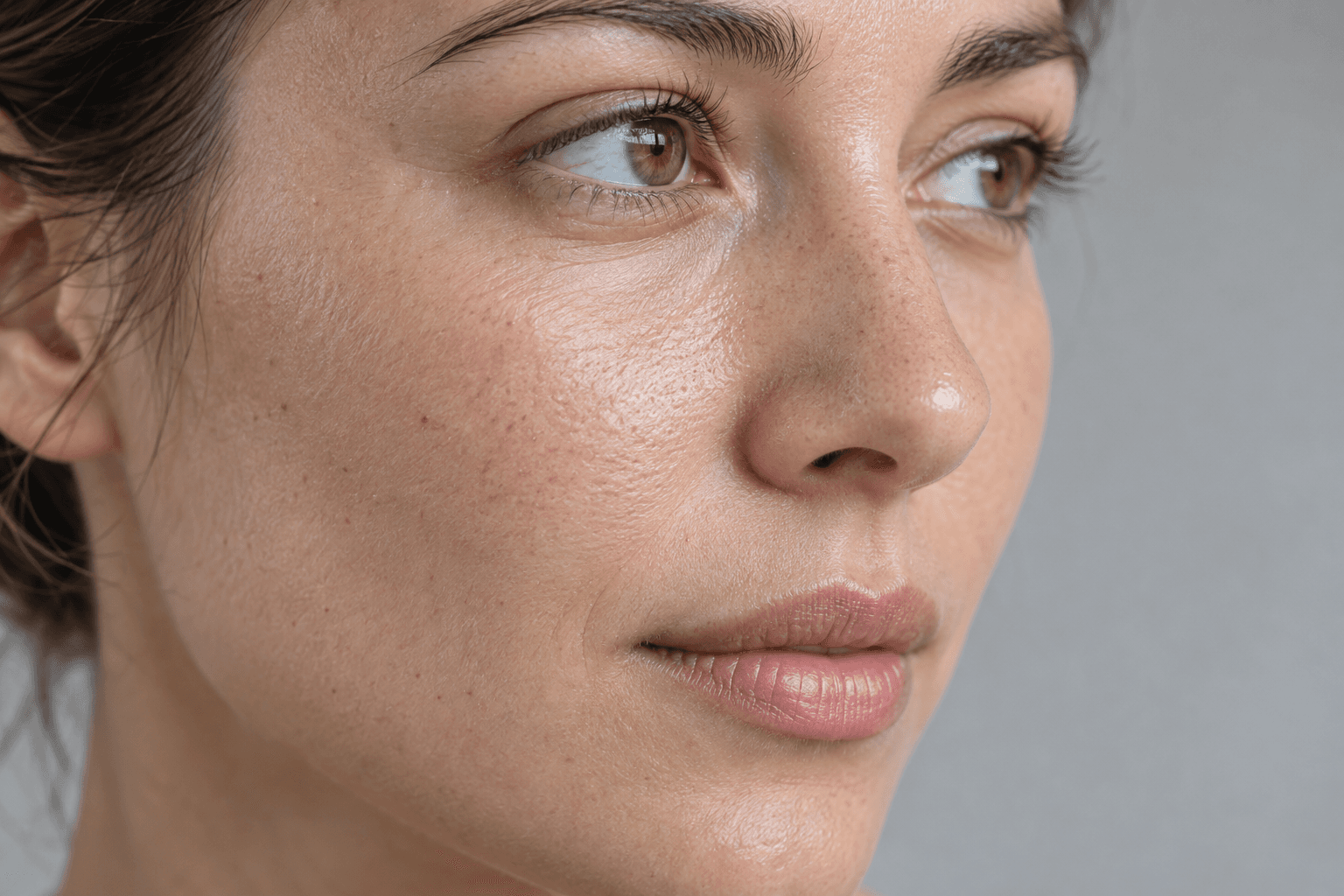
If small dots on your nose keep returning after cleansing, the first question is what they are. Sebaceous filaments are normal follicular contents; blackheads are open comedones, a type of acne lesion. They can look similar, but a visible dot does not automatically need extraction. Cleveland Clinic; AAD acne guide.
How the two differ
Sebaceous filaments contain skin oil and cellular material within the follicle. Their presence is not, by itself, a skin disorder. A blackhead forms when material blocks the follicle while its opening remains open. Original description of filaments; AAD.
| Feature | Sebaceous filament | Blackhead |
|---|---|---|
| What it represents | Normal follicular contents | An open comedone, which is an acne lesion |
| Usual appearance | A small, flat, pale dot; sometimes grayish or yellowish | A more distinct dark plug at the follicular opening |
| What to consider | Visibility alone does not mean treatment is needed | Whether it is part of an acne concern that needs assessment |
These are clues, not a reliable home diagnostic test. A close-up photograph may not settle the distinction, and squeezing to see what comes out can injure the skin. If you are unsure, assessment is more useful than repeated removal attempts. Cleveland Clinic; AAD on recognizing acne.
Neither is a sign that you need to scrub harder
Visible filaments do not establish poor hygiene. A blackhead's dark color is not trapped dirt. Aggressive scrubbing can irritate the skin without answering whether a dot is a filament or a comedone. AAD acne guide; AAD oily-skin guidance.
What removal can—and cannot—tell you
An immediate change in appearance does not establish a lasting result. Filament contents can accumulate again after removal; there is no single refill timetable that should determine when everyone needs a facial. Original morphology report.
Blackheads can return after extraction, too. Removing an existing lesion and managing the development of new acne are different goals. A recurring dot does not, on its own, tell you that a cleansing treatment failed or that you need something stronger. AAD on acne extraction.
A measured approach to care
Use gentle cleansing and avoid repeated picking or squeezing. Manipulating acne lesions can worsen inflammation and increase scarring risk. AAD on manipulation; AAD oily-skin guidance.
Adding several exfoliating products at once is a poor substitute for identifying the concern and considering what your skin tolerates, including the products you already use. AAD exfoliation guidance.
For the differences between methods and their risks, see our exfoliation guide. If your main concern is broader pore visibility rather than an individual dark plug, the pores and texture guide addresses that separate question.
Seek assessment if the diagnosis is unclear, lesions become painful or inflamed, acne leaves scars, or attempts to manage the dots cause persistent irritation. Do not assume every dark spot is a harmless filament. AAD acne overview.