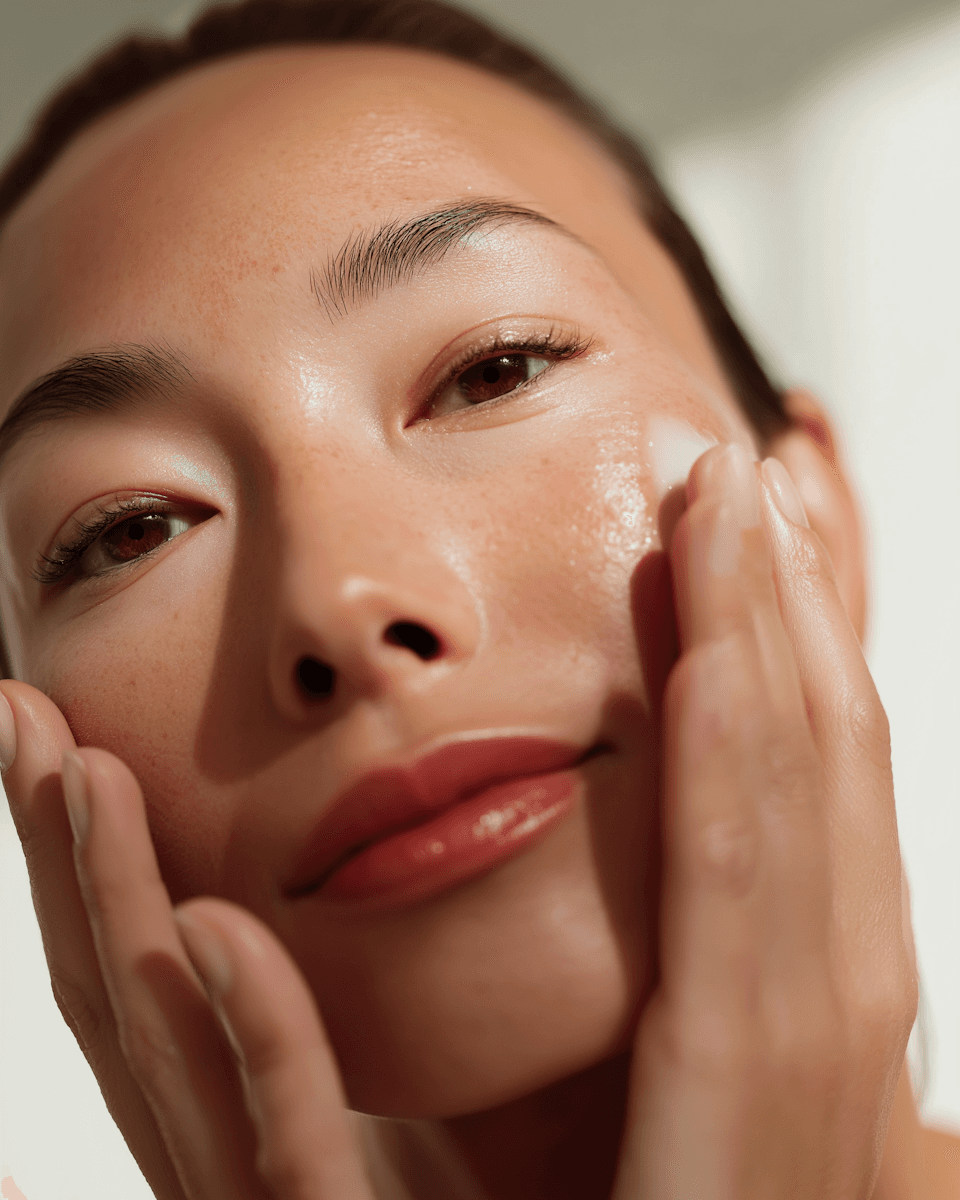
“Skinbooster” is an informal umbrella term for injectable products used primarily to improve selected skin-quality features, such as hydration or surface smoothness, while aiming for little or no visible contour change. It does not identify one ingredient, formulation, injection plane or standardized medical category.
That distinction matters. Two products described as Skinboosters may differ in hyaluronic-acid concentration, crosslinking, viscosity, added ingredients, intended anatomical area and legally authorized use. Evidence from one formulation cannot establish the effects or safety of another.
At a glance
- A Skinbooster is not one standardized product. The exact formulation, label, area and technique are more informative than the category name.
- Hyaluronic acid is common, but formulations differ. Products may contain non-crosslinked or crosslinked HA at different concentrations, with different excipients and material behavior.
- The usual goal is skin quality rather than structural reshaping. Hydration, smoothness, texture and fine superficial lines are different endpoints from projection, contour or tissue replacement.
- Some products marketed as Skinboosters are legally classified as dermal fillers. Classification and authorized uses depend on the exact product and jurisdiction.
- NCTF, Profhilo, mesotherapy, microneedling, contour fillers and collagen biostimulators are not interchangeable terms.
- Human studies suggest that selected HA formulations can improve some measures of hydration or smoothness, but results are product- and area-specific.
- Temporary injection reactions are common. Infection, delayed nodules and rare vascular complications are also clinically relevant.
What does “Skinbooster” mean?
The term is usually applied to an injectable protocol whose main endpoint is skin quality rather than obvious volumization. “Skin quality,” however, is itself broad. A study may measure hydration with an instrument, grade surface smoothness from photographs, assess fine lines, record elasticity or ask participants about radiance and satisfaction. Improvement in one measure does not prove improvement in all of them.
There is no single concentration or rheological threshold that turns a product into a Skinbooster. The sources reviewed also do not support treating the word as one cross-jurisdiction regulatory class.
A useful example is SKINVIVE by Juvéderm. The U.S. Food and Drug Administration describes this crosslinked HA gel as a dermal filler and authorizes product-specific intradermal uses. Its skin-quality endpoint does not stop it from legally being a filler device. This is why comparing products by treatment goal, formulation, intended plane, anatomical area and current label is more accurate than relying on slogans.
Mexico’s public medical-device register, checked on August 28, 2026, contains separate records for named HA products commonly discussed in this area, including NCTF, SKINVIVE, Profhilo, Restylane Skinboosters Vital, Belotero Revive and Viscoderm Hydrobooster. A registration entry for one product does not establish that every similarly marketed injectable has the same composition, indication or instructions. Because the register is dynamic, the current entry and exact instructions should be checked again before a product is used or described.
Formulation matters more than the category name
Hyaluronic acid can bind water, but “contains HA” is not enough information to predict a clinical result. Our guide to hyaluronic acid explains the molecule in more detail. For an injectable product, relevant questions include:
- Is the HA crosslinked, non-crosslinked or presented as a product-specific hybrid complex?
- What are its concentration, particle characteristics and rheological behavior?
- Does it contain lidocaine, amino acids, vitamins or other components?
- Is it supplied as a sterile injectable, or is it intended only for topical use?
- Which tissue plane, area, volume and technique appear in its instructions?
- Which exact formulation was tested in the cited human study?
Crosslinking can change how an HA gel behaves and persists in tissue. Concentration alone does not describe viscosity, cohesivity, spread or suitability for a particular plane. Added ingredients create further evidence and allergy questions. A result from a crosslinked intradermal gel should not be transferred automatically to a non-crosslinked multicomponent solution.
Skinboosters, fillers and collagen biostimulators: different endpoints
Skinbooster versus contour filler
A contour filler is selected and placed to change shape, projection or structural volume. A Skinbooster protocol generally aims at more diffuse skin-quality changes with less intended contour alteration.
The boundary is not absolute because some HA products used for skin smoothness are legally dermal fillers. The practical distinction is therefore the endpoint, material behavior, amount, tissue plane, area and label—not whether someone avoids the word “filler.” The dermal fillers guide covers structural filler categories and their separate risk considerations.
A Skinbooster should not be expected to replace a contour treatment when the clinical issue is volume loss, nor should a product designed for deeper structural placement be assumed suitable for superficial microinjections.
Skinbooster versus collagen biostimulator
Collagen biostimulators are a separate group of injectable materials selected partly for a tissue response that develops over time. Examples include product-specific formulations containing poly-L-lactic acid or calcium hydroxylapatite. Their material behavior, treatment goals, timing and management differ from those of HA skin-quality gels.
Some biostimulator protocols also discuss skin quality, and some HA products may influence extracellular-matrix markers. That overlap in desired outcome does not make the categories interchangeable or prove the same degree of collagen production in people.
NCTF, mesotherapy and microneedling are different concepts
NCTF is a named multicomponent formulation family, not another word for every Skinbooster. Its current user leaflet identifies NCTF 135 HA as an injectable preparation containing 5 mg/mL non-crosslinked sodium hyaluronate plus a polyrevitalizing solution. A randomized, manufacturer-funded study evaluated that exact injectable formulation in the face, neck and décolletage. Some outcomes favored NCTF, while the hydration difference was significant only seven days after the final injection. The control group used a daily moisturizer rather than sham injections. Those findings belong to the studied product, injection protocol and population.
The manufacturer separately describes NCTF 135 HA as an injectable medical device and NCTF BOOST 135 HA as a sterile topical cosmetic. The name and route matter: evidence for the injection cannot validate device-assisted topical use automatically.
Mesotherapy describes a delivery approach involving multiple small injections. It does not define one ingredient or guarantee that different injected solutions are equivalent.
Microneedling mechanically creates small channels and is also a distinct procedure. A sterile injectable should not be assumed suitable for topical application or device-assisted delivery. In the United States, the FDA states that authorized microneedling devices have not been cleared for delivering cosmetics, medications, vitamin solutions or blood products into the skin. Local authorization and product instructions must be checked separately.
Profhilo and “bioremodeling”
Profhilo is a product-specific HA formulation often discussed under “bioremodeling.” It should not be treated as a generic synonym for Skinboosters, NCTF or contour fillers.
A 2026 split-face trial tested a specific Profhilo protocol against saline in the perioral area of 12 women. Visual measures of wrinkles and pores improved, but the increase in dermal thickness did not outperform saline, and participant satisfaction was mixed. The small sample and area-specific design do not support transferring its findings to other HA products or using a brand category as proof of a class-wide effect.
Areas and anatomical goals
Skinbooster discussions commonly involve the cheeks, face, neck, décolletage and hands. These areas differ in skin thickness, mobility, vascular anatomy, underlying structures and the outcomes that matter.
Randomized studies discussed here concern particular HA products and anatomical areas. They do not support using every Skinbooster in the eyelids, lips, neck or hands. The under-eye region and other anatomically constrained areas require particularly careful product and technique selection.
The clinical goal should also be explicit. Improving a hydration measurement is different from treating pigment, acne scars, dynamic wrinkles, laxity or volume loss. One injection category is unlikely to address every visible feature attributed to “tired skin.”
Neck lines: what did the study show?
A randomized SKINVIVE trial enrolled 159 adults with moderate or severe horizontal neck lines. One month after initial treatment or an optional touch-up, the primary analysis estimated that about 75% of the treated group improved by at least one grade on the neck-line scale, compared with 16% without treatment. The calculation included statistical estimates for missing data. An evaluator unaware of the assigned group performed the assessment. FDA-reviewed study.
This does not demonstrate a lifting effect. People with significant laxity and pronounced skin folds were excluded; AbbVie sponsored the trial, which did not use sham injections. This product’s U.S. indication does not by itself establish an authorized use in Mexico.
What does the evidence show?
A 2023 systematic review found 13 clinical studies of injectable HA formulations for facial skin quality. The authors described encouraging changes across selected outcomes but emphasized the need for larger randomized trials. The included formulations, techniques and outcome measures varied, limiting class-wide conclusions.
A 2025 systematic review and meta-analysis included 12 studies, with only six contributing enough data for pooling. HA injections were associated with improvements in hydration and radiance, while pooled results did not show significant changes in elasticity or melanin index. Heterogeneity was very high for hydration; after one outlying study was removed, the pooled hydration result was no longer statistically significant.
The pivotal VYC-12L study provides stronger evidence for one product and endpoint. In a randomized, evaluator-blinded, delayed-treatment-control trial, 209 adults were assigned to intradermal cheek treatment or delayed treatment. Investigator-rated cheek smoothness and fine lines improved more often in the treated group at one month, with follow-up through six months. The manufacturer designed, conducted and funded the study, and several authors were employees.
This evidence supports a narrower conclusion than “Skinboosters rejuvenate the skin.” Selected HA formulations can improve certain measured skin-quality outcomes in defined areas. It does not establish universal effects on pores, pigment, scars, laxity, collagen production or every type of fine line.
How clinicians select a formulation and protocol
Selection begins with the feature being assessed, not a trend name. Relevant factors include:
- the exact concern and whether it is primarily surface, pigmentary, vascular, structural or dynamic;
- skin condition, anatomy and the proposed injection plane;
- the complete product label and evidence for that area;
- previous fillers, biostimulators, threads, surgery or energy-based procedures;
- active infection, inflammation, dental infection or a recent procedure near the area;
- allergies, prior reactions, immune conditions and tendency toward abnormal scarring;
- pregnancy or breastfeeding, where product-specific safety data are often absent; and
- medicines or supplements that may affect bleeding or immune response.
Previous injectable history matters because a new reaction, nodule or contour change may involve an earlier product. Prescribed medicine should not be stopped without guidance from its prescriber.
The Skinboosters in Mexico City page covers the local treatment route. This guide remains focused on definitions, category boundaries, evidence and risk interpretation.
Risks, contraindications and warning signs
Expected short-term reactions can include redness, tenderness, pain, swelling, bruising, itching, discoloration and small raised injection points. Their frequency and duration vary by formulation, amount, plane, technique and study population.
Other possible complications include infection, persistent lumps, inflammatory nodules, delayed swelling, asymmetry, unwanted contour change and hypersensitivity. Small trials cannot reliably measure uncommon or delayed events.
Any facial injection also requires awareness of vascular anatomy. Product entering a blood vessel can cause occlusion, tissue ischemia or necrosis. Rare reported consequences of intravascular filler injection include visual impairment, blindness, stroke or death. Unusual or escalating pain, skin blanching or mottling, cool or dusky skin, a visual change, weakness, facial droop or difficulty speaking requires urgent medical assessment.
Contraindications and precautions are product-specific. Active infection or inflammation in the proposed area generally changes the risk assessment, while allergies to HA-source residues, bacterial proteins, lidocaine or other ingredients depend on the exact formulation.
Timeline and realistic outcomes
Immediate post-injection fullness can reflect placed material, fluid and swelling; it should not be mistaken for the final skin-quality effect. Study assessments often occur weeks later.
There is no universal number of sessions, interval or duration for Skinboosters. One trial’s schedule belongs to that formulation and indication. Persistence also depends on material properties, area, technique, metabolism and the endpoint being measured.
A realistic aim is a possible modest improvement in selected features such as hydration or surface smoothness. Before-and-after photographs cannot predict an individual result and are difficult to interpret without matched lighting, expression, camera distance and timing.
Sources
- U.S. Food and Drug Administration. SKINVIVE by Juvéderm—P110033/S059. FDA approval overview · Summary of Safety and Effectiveness Data · June 2026 supplement P110033/S099.
- U.S. Food and Drug Administration. Dermal Fillers (Soft Tissue Fillers): Risks and Safety Information.
- COFEPRIS. Public medical-device registration records: NCTF 0464C2023, SKINVIVE 1318C2017, Profhilo 1189C2017, Restylane Vital 3076C2013, Belotero Revive 2242C2016 and Viscoderm Hydrobooster 1038C2026.
- Zhou R, Yu M. The Effect of Local Hyaluronic Acid Injection on Skin Aging: A Systematic Review and Meta-Analysis. J Cosmet Dermatol. 2025. PubMed 39807700 · PMC11731322.
- Ghatge AS, Ghatge SB. The Effectiveness of Injectable Hyaluronic Acid in the Improvement of Facial Skin Quality: A Systematic Review. Clin Cosmet Investig Dermatol. 2023. PubMed 37038447 · DOI 10.2147/CCID.S404248.
- Alexiades M, Palm MD, Kaufman-Janette J, et al. A Randomized, Multicenter, Evaluator-blind Study to Evaluate the Safety and Effectiveness of VYC-12L Treatment for Skin Quality Improvements. Dermatol Surg. 2023. PubMed 37163665 · DOI 10.1097/DSS.0000000000003802.
- Fanian F, Deutsch JJ, Bousquet MT, et al. A hyaluronic acid-based micro-filler improves superficial wrinkles and skin quality: a randomized prospective controlled multicenter study. J Dermatolog Treat. 2023. PubMed 37577796 · NCTF user leaflet.
- Zanella G, de Souza Ataíde FT, de Lima Bonato TC, et al. Effects of Profhilo Tissue Bioremodeling on Skin Texture and Perioral Wrinkles: A Randomized Controlled Triple-Blind Clinical Trial. Aesthetic Plast Surg. 2026. PubMed 41731228 · DOI 10.1007/s00266-026-05634-4.
- U.S. Food and Drug Administration. Microneedling Devices.
Reviewed by our medical team
Dra. Jessica Tapia
Medical Director
Clinical content on this blog is reviewed by the Juvenalia Brío medical team for scientific accuracy and consistency with the care we provide.